Quick overview
-
An employer can only give notice for the reasons in Section 52 of the Labour Code.
-
The notice must be in writing and contain a specific reason.
-
During a period of protection (e.g. illness, pregnancy), notice is prohibited.
-
Invalidity can be challenged in court within 2 months.
-
If you are successful, you are entitled to wage compensation.
Not sure if your notice is valid? Have it checked by a solicitor – the details of the wording are often decisive.
Have you been unfairly dismissed from your job or presented with an unfavourable termination agreement (in layman’s terms, a termination by agreement)?
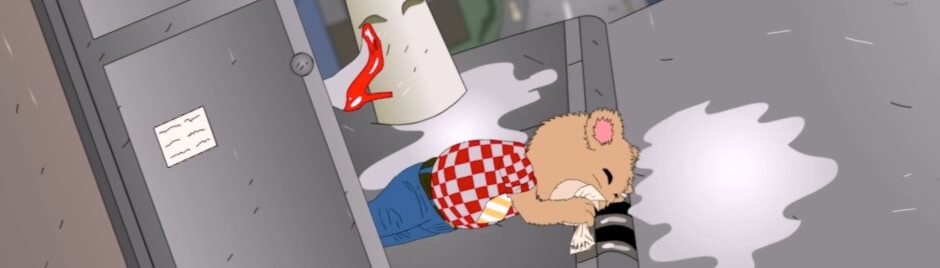
Mr. Bear in our video worked at Mr. Lion’s company for many years. He was an average employee, but he had no wrongdoing. One day, however, he found out that he was no longer counted on in the company and was given an hour’s notice. The employer, Mr Lev, had no idea how to terminate an employment relationship under the Labour Code. Most animals in this situation would still fold their ears, tuck their tails and start looking for another job. But Mr. Bear didn’t give in. He contacted an Accessible Lawyer, who explained that the law was on his side. And so Little Bear got the better of the cruel Lion.
Are you solving a similar problem?
Did you get fired? Don't let it go unchecked
Quitting your job is stressful. Often it comes unexpectedly, under pressure and with the feeling that “there’s nothing to be done about it anyway”. In reality, however, the employer must comply with the strict rules of the Labour Code. If they break them, you can defend yourself – and get back pay or redundancy pay.
More information
- When you order, you know what you will get and how much it will cost.
- We handle everything online or in person at one of our 6 offices.
- We handle 8 out of 10 requests within 2 working days.
- We have specialists for every field of law.
In this short story, we’ll show you how our service for employees who have to leave their jobs involuntarily works.
Be like Mr Bear and show your boss, whether he’s a Lion or an Ox, that you know your rights.
When is a resignation really invalid
When is a resignation really invalid
According to the Labour Code, an employer can only give notice for the following main reasons:
- organizational changes (abolition of a position, redundancy),
- medical incapacity,
- failure to meet prerequisites or requirements,
- violation of work duties.
In addition, the Labour Code prohibits termination of employment during periods of sick leave, pregnancy or parental leave, for example.
In practice, we very often encounter situations where an organisational change is only formal and in reality it is an attempt to get rid of a particular employee. At other times, the employer claims unsatisfactory performance without having first invited the employee in writing to remedy the situation, as required by law.
It is also relatively common to overestimate the intensity of a breach of work obligations – a minor misconduct is presented as a serious breach. Nor is it an exception when notice is served during the so-called “protection period”, for example during sick leave, even though the law generally prohibits this practice.
In our office we deal with cases where the employer has underestimated the formalities – and this is often the key.
Tip for article
Tip: Did you know that you can defend your termination even during the probationary period? You can only do so under certain conditions. Read more about them in our article.
How to defend yourself – a step-by-step procedure
If you suspect your notice is invalid:
- Act quickly: You can challenge the invalidity in court within 2 months of the date the employment relationship should have ended.
- If you do this and the court agrees, the employment relationship continues.
- Claim back pay: You are entitled tocompensation equal to your average earnings from the date of notification until you are allowed to return to work.
The court may reduce the compensation beyond 6 months as appropriate, but this is assessed on an individual basis.
If you need to prepare a notice to your employer or a claim, please do not hesitate to write to us. We will be happy to help you with this.
Be like Mr Bear
Most employees “fold their ears” and look for a new job after receiving notice. Sometimes that’s the right strategy. But if the termination is illegal, you have the right to defend yourself.
Mr. Bear found that the law is on his side. And a little bear can really “roar like a grizzly” when he knows his rights.
Have the deposition reviewed. Just send it to us online – we’ll respond quickly and clearly.
Summary
Mr. Médi’s story shows a simple thing: an employer cannot give notice arbitrarily. It must comply with the Labour Code, give a specific legal reason and respect the protection periods. If he fails to do so, the notice may be invalid. Two things are key: act quickly and don’t sign anything under pressure. You only have 2 months to challenge the notice. If you miss this deadline, your right to defend yourself is lost. Have your notice reviewed before you accept that you are quitting. Sometimes all it takes is one mistake in wording to turn things around.
Frequently Asked Questions
Can my employer give me notice without giving a reason?
No. The employer can only give notice for the reasons set out in Section 52 of the Labour Code.
How long is the notice period?
Normally at least 2 months (§ 51 (2)), unless otherwise provided by law.
What if I was sick at the time of my termination?
Termination is generally prohibited during the protection period, with exceptions provided by law.
How long do I have to file a lawsuit?
2 months from the date on which the employment relationship was due to end.
Do I have to go to work if I file a lawsuit?
If you give written notice that you insist on continued employment, the employment relationship continues.
What if I've already signed the agreement?
Challenging the agreement is only possible in specific cases (e.g. mistake, coercion). The situation must be assessed individually.