Quick summary
- Tachometer reading is not only unethical, it can be a crime of fraud.
- It is not only the person who physically altered the tachometer who may be liable, but also the dealer who knew about the discrepancy or ignored it.
- Before buying a car, it is important to check the mileage history against the VIN and compare it to the condition of the car and the documentation.
- After the purchase, rebate, rescission and criminal charges can be addressed.
- The speed of response and the quality of the evidence collected are crucial.
Do you need to quickly assess whether you are entitled to a discount, a rescission or a criminal complaint? Use our legal advice service.
What is a tachometer recall and why is it done?
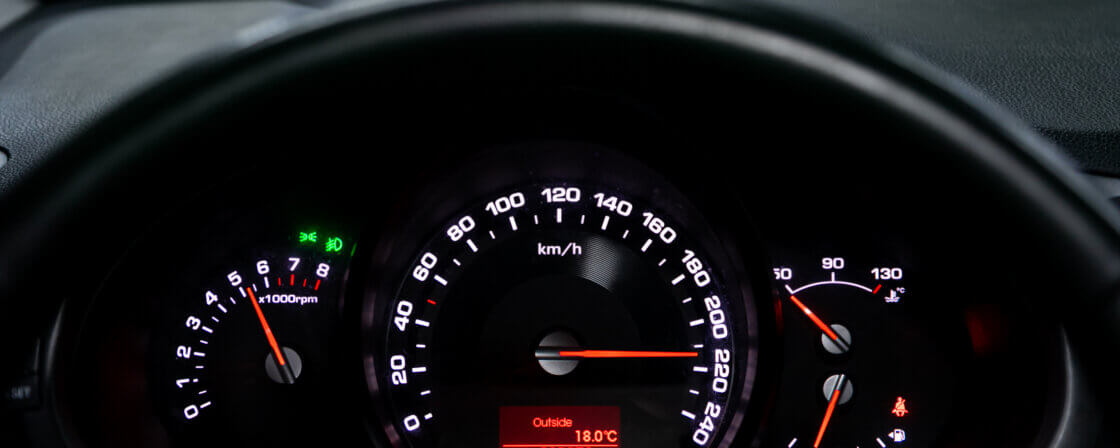
Tachometer rollover is a fraudulent practice in which the seller artificially lowers the mileage on a car to make it look more preserved so that he can sell it for a higher price. This is because less mileage often means higher buyer confidence, so it is a tempting lure for dishonest sellers. And today, it’s not difficult to do a recall – it can be done in a matter of minutes, either through software or by direct intervention in the control unit. Often this is accompanied by the falsification of service books or invoices, which takes the whole scam to an even higher level of seriousness.
What does the law say about tachometer rollovers?
In terms of criminal law, tachometer tapping is a fraud offence under Section 209 of the Criminal Code. The perpetrator deliberately misleads the buyer by pretending that the vehicle is in better condition than it actually is and thereby obtains a benefit. Typically, this is a difference in selling price – a car with 90,000 km is worth different than the same car with 250,000 km.
The Criminal Code distinguishes the amount of damage caused by the fraud. If the damage is not small, the perpetrator faces a fine, probation or even up to five years’ imprisonment. If greater damage has been caused or if the offender has committed the act repeatedly, the penalty may be even more severe.
In addition to fraud, bottling can also be qualified as damage to someone else’s rights (Section 181 of the Criminal Code) or forgery and alteration of a public document if service records or other documents are altered.
Are you solving a similar problem?
Have you encountered a twisted speedometer? Don't be left without help
Our law firm also specializes in consumer protection and used car fraud. We can help you negotiate a discount, rescind a contract or file a criminal complaint.
More information
- When you order, you know what you will get and how much it will cost.
- We handle everything online or in person at one of our 6 offices.
- We handle 8 out of 10 requests within 2 working days.
- We have specialists for every field of law.
Who is responsible for the tachometer reversal?
The original owner of the vehicle may be liable for a spun tachometer if he or she ordered the adjustment, the car dealer or other dealer who sells the vehicle and knows about the spun tachometer, the importer of the used vehicle from abroad, or the mechanic who adjusted the tachometer.
What is legally relevant is whether the person knew or could have known that the speedometer did not show the true condition. If, for example, a car dealer defends itself by claiming that it did not know about the rollover without even carrying out a basic check of the speedometer, such a defence may be very difficult to sustain.
How do I check my speedometer before buying?
The best defence against fraud is to thoroughly check the car before signing the purchase contract. Today, there are a number of tools you can use to check the odometer and avoid buying a car with a rolled-up mileage.
The easiest is the free VIN mileage verification. All you need to do is know the VIN code of the vehicle (usually found on the registration certificate and on the bodywork) and enter it into one of the available online systems. Among the best known are:
- ministry of Transport database,
- cebia services (basic information available free of charge),
- other specialised portals to check the speedometer against MOT and service records.
This speedometer check will show you the mileage trend at each MOT. If you find that at the last MOT the car had 240,000 km but now has 180,000 km, then clearly something is wrong.
You can also take advantage of a service check. A reputable garage can detect signs of tampering with the control unit or other parts of the system. If a car is sold with “maintained 90,000 miles” but the seats and steering wheel are ruined, something is wrong.
And then you can also look at the service book and invoices. Use them to check the service history – ideally you want the original invoices from the branded garage. Beware of fake service books, which can be bought online. If the record is written with one pen and one handwriting, be wary.
Tip for article
Are you planning to take your used car on the motorway right away? Don’t forget to check that it has a valid vignette. Anyone who doesn’t have one and drives without it risks a hefty fine. Find out what’s involved in an electronic vignette in our article.
What if I find out the speedometer was twisted after I bought it?
Did you find out after you bought the car that you were sold a car with a fraudulent tachometer? Don’t panic because the law is on your side. This is considered a hidden defect that the seller concealed. Even if the defect was allegedly unknown to the defendant. As a buyer, you have several options to defend yourself. And the quicker you act, the better.
Here’s a step-by-step guide:
- Approach the seller: First, contact the seller (ideally in writing) and describe the facts. You can either ask for a discount on the purchase price or a refund. If the seller acknowledges the mistake, the solution can be surprisingly simple.
- Consider withdrawing from the contract: If the difference in mileage is significant or if the seller refuses to accommodate you, you can withdraw from the contract. In this case, you should get the full purchase price back and return the car to the seller.
- File a criminal complaint: it’s not just rude, it’s a fraud offence. You can report the suspicion to the police. It’s a good idea to include any available evidence: an online database extract, service reports, a copy of the purchase contract or photo documentation.
- If you are not sure how to formulate your claim or exactly how to proceed, do not hesitate to use our legal advice service. We can help you with drafting a demand letter to the seller, filing a criminal complaint, and possibly filing a lawsuit.
In any case, keep your evidence – the more the better. You may need a professional opinion or a report from the garage to confirm the curl, a tachometer check from one of the online databases (use those that offer free VIN mileage verification), email communication with the seller, and the purchase contract and other documents for the car.
This evidence will make your position significantly stronger when dealing with the whole situation, whether at the table with the seller or in court.
An example from our law practice
Mr. Dokoupil purchased a used car from a smaller dealership with a stated mileage of 118,000 miles. Shortly after the purchase, he had the car’s history checked during a routine service and it turned out that the actual mileage was more likely to be around 240,000 km, both in an earlier technical inspection abroad and in subsequent records. The car thus had a significantly lower real value than what it was sold for.
We first reviewed the purchase contract, service documentation, advertisement and communications with the seller with the client and assessed how it could be shown that the buyer had been misled. We then prepared a pre-suit notice of claim in which we asserted liability for the latent defect and proposed specific financial compensation. At the same time, we also set up an option in the case in case it was necessary to withdraw from the contract.
In this case, an out-of-court settlement was reached and the client recovered a substantial part of the purchase price without the need for a lengthy court case. In similar cases, we have seen in practice that the outcome is often determined mainly by the quick securing of evidence and a correctly formulated first legal step.
How can the seller defend itself?
A seller who did not adjust the speedometer himself and did not know about the curl must prove that he acted in good faith. Evidence of purchase of the car in an already rolled condition (e.g. an invoice from the importer) or a note in the sales contract such as “mileage not guaranteed” can help. However, even this may be found insufficient by the court if it was obvious that the statement was misleading.
Tachometer overstatement is not only morally unacceptable but also punishable by criminal law. If you are buying a used vehicle, check the speedometer and verify the miles by VIN for free before signing any contract. Deal with suspicious cases as soon as possible – ideally with a lawyer on your side. And if you’re the seller, be honest and transparent, or you could find yourself in the crosshairs of the police and the courts.
Tip for article
Considering buying a used car? Find out what the vehicle registry records about it – such as the number of previous owners, the date of first registration or technical changes. Such information can help you spot discrepancies, including possible speedometer rollovers.
Summary
Tachometer rollover is a serious problem in the used car market. It is not just a technical manipulation of the vehicle, but a legally significant misrepresentation to the buyer that can have criminal and civil consequences. Buyers usually pay not only for the car itself, but also for the expected roadworthiness, durability and lower risk of future repairs. This is why the mileage figure is so crucial.
From a preventive point of view, it pays not to rely solely on the seller’s claims. A reasonable minimum is to check the mileage history against the VIN, check the service documents and have the vehicle inspected by an independent garage. If a discrepancy becomes apparent after the purchase, the key is to quickly secure evidence and choose the correct legal course of action. Depending on the circumstances, a demand for a discount, withdrawal from the contract and criminal charges may be appropriate.
In practice, it is often crucial how well the case is documented from the outset. That is why it makes sense to address suspected rolled-up speedometer as soon as possible and not just leave the matter to the informal promises of the seller. A well-prepared procedure greatly increases the chances that the dispute will be resolved quickly and with the least loss to the buyer.
Frequently Asked Questions
Is it a criminal offence to roll a speedometer?
Yes. Typically, this can be fraud because the buyer is given false information about the condition and value of the vehicle.
Can I cancel the contract if I find out the mileage has been rolled up?
Yes, especially if it was a material defect and the difference in mileage had a major impact on the price or decision to buy the car.
Is a VIN mileage history listing sufficient proof?
It’s important evidence, but it’s best to supplement it with a service report, purchase agreement, advertisement and communication with the seller.
Who's responsible for the tachometer being twisted?
Not only the person who adjusted the speedometer, but also the dealer who knew about the problem or should have discovered it with ordinary care.
Can I check my speedometer for free?
Yes, a basic mileage history check by VIN is available through the official tool of the Ministry of Transport.
What if the dealer claims he didn't know about the curl?
Even that may not automatically protect him. In a dispute, it is usually important whether he acted honestly and whether he at least did a basic check of the condition of the car.