When an insurance company labels a car as “totaled” too quickly
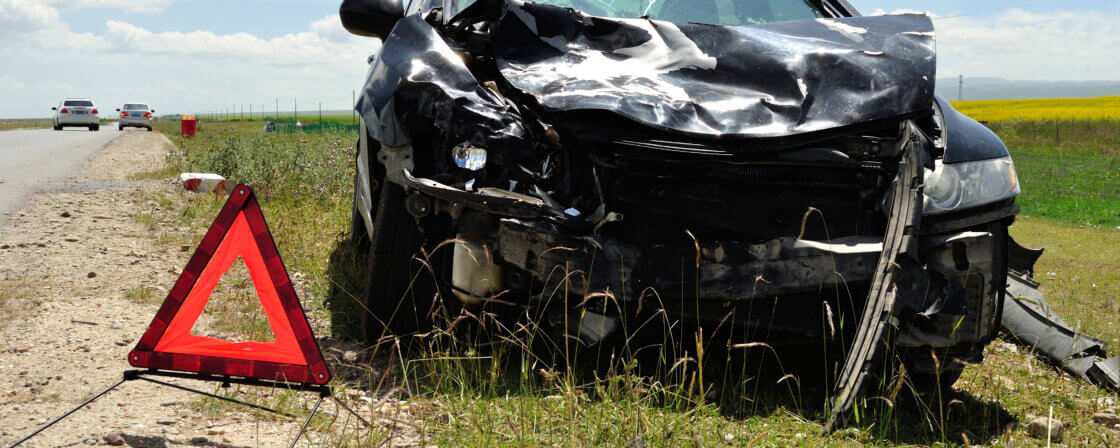
Our client, let’s call him Mr. Peter for example, was driving on the D1 motorway when he was rear-ended by another vehicle. His Skoda Superb was damaged mainly at the rear, but at first glance the car appeared repairable. However, when he received a statement from his insurance company a few days later, he learned that the damage to the car was total and the compensation offered was more than CZK 150 000 less than the real value of the car.
Peter contacted us to ask whether it was possible to challenge the decision. After studying the expert documents, the repair calculations and the insurance company’s total damage tables, we found several fundamental errors. As a result, after our intervention, the insurance company increased the compensation by CZK 142,000.
This real-life case demonstrates that the insurance company’s rejection of total loss can be successfully challenged if it proceeds incorrectly or purposely reduces the value of your vehicle.
Are you solving a similar problem?
We can help you with compensation for total loss
We will arrange communication with the insurance company, prepare an opposing opinion and complete argumentation, negotiate an increase in compensation and recover additional compensation in court if necessary.
I want to get in a better position with the insurance company
- When you order, you know what you will get and how much it will cost.
- We handle everything online or in person at one of our 6 offices.
- We handle 8 out of 10 requests within 2 working days.
- We have specialists for every field of law.
What is total vehicle damage and when does it occur
In practice, total damage is considered to be a situation where restoring the vehicle to its previous state would be economically impractical – typically when the cost of repair significantly exceeds the normal value of the vehicle before the accident (case law often refers to a threshold of around 30% above the normal value, unless there are exceptional circumstances). Insurance companies often set this threshold so that the repair is “not worthwhile”, but this may not be the reality.
Total loss can occur in two modes:
- Total loss on the at-fault party’s compulsory liability policy: this is a situation where you are the victim and another vehicle caused the damage. The at-fault party’s insurance company has to reimburse everything thanks to their compulsory liability. Therefore, the insurance company must present clear, substantiated and verifiable findings. That is, how it calculated the normal value of your vehicle before the accident, what the cost of repairs was and what prices it based it on, why it assessed the damage as “total”, how it determined the residual value of the wreck and what methodology or tables it used. In the case of compulsory liability insurance, everything must be transparent because the insurance company decides on the damage that has been caused to you and is obliged to compensate you in full.
- Total loss insurance: Here, on the other hand, you are the insured and the insurance company assesses the damage to your vehicle according to what you have agreed in the contract. The contract usually defines when a total loss occurs (e.g., when the cost of repairs exceeds 80% of the vehicle’s value), how the value of the vehicle is determined, and how deductibles, depreciation, or other deductions are calculated.
Therefore, the insurance company’s conclusions are primarily based on your specific insurance policy, not just the law as with compulsory liability.
The key concept here is the normal value of the vehicle – that is, what your car would have been worth on the market just before the accident. If the insurance adjuster underestimates this value, they will automatically reduce the resulting compensation.
Not everyone knows that depreciation of individual parts, labor and material costs, the insurance company’s methodology, and the residual value of the car after the accident also enter into the calculation.
This is where mistakes are often made – the insurance company may underestimate the value of the car or overestimate the value of the residual parts (the so-called wreck), thus reducing the resulting compensation again.
This is exactly what happened to Mr Peter: the insurance company undervalued his car by almost 20%. After our intervention, the calculation had to be adjusted.
How to calculate total damage to a vehicle
To understand the whole process, it is essential to know how the insurance company actually proceeds. The most commonly used formula is: Total damage equals the normal value of the vehicle before the accident minus the value of the remains (wreckage). Therefore, both figures must be correctly quantified.
The normal value of the vehicle before the accident is determined by its age and mileage, service history, equipment, technical condition before the accident and prices on the market (advertisement, database). A 10% error in this value means a difference of tens of thousands of crowns.
The cost of repair is also addressed. The insurance company assesses how much it would cost to repair the vehicle in an authorised repair shop. If it exceeds the limit of economic feasibility (e.g. 80% of the car’s value), it will label the car as a total loss.
As far as the residual value of the car (wreck) is concerned, the insurance company often uses auction systems, but these can artificially inflate the value of the wreck. This significantly reduces the final compensation amount. In the case of Mr Peter, the insurance company set the value of the wreck at CZK 98,000, but according to the real valuation it should have been a maximum of CZK 52,000. After our opposing opinion, the insurance company recalculated the value.
Refusal of total damage or when you have the right to disagree
Many clients ask whether they can tell the insurance company that they require repairs because the car is repairable. Yes, a total loss denial is possible, but it is important to know when you have a strong position.
When you can challenge the insurance company’s decision:
- The insurance company undervalued the usual and customary price of the vehicle. For example, it lists lower equipment, ignores service history, and omits extra features.
- The price of the residuals is overstated. Auction platforms routinely display unrealistic bids.
- Repair costs have been incorrectly calculated. For example, parts replacement is often calculated instead of repairable damage.
- The insurance company’s methodology does not comply with the law. Especially in the case of compulsory liability insurance, the procedure must be objectively demonstrable.
Peter’s case contained two errors, namely the wrong normal price and the overestimation of the wreck. After our claim, the insurance company had to recalculate the whole case.
If you want to effectively reject total damages, it is essential to prepare qualified documentation – an expert report, an opposing estimate or legal argument. We can help you secure them from A to Z.
Total damage according to insurance company tables
Each insurance company has its own internal methodology for assessing total loss. These total loss tables are not public, but have a major impact on the outcome of the claim. They include average labour and parts prices, depreciation coefficients, amortisation, average market prices for the model and the limit of economic reparability (usually 70-90%).
It is almost impossible for a layman to verify that the insurance company has used the tables correctly. In Peter’s case, we found incorrect depreciation for body parts and outdated labor rates in the calculation. The expert we secured confirmed that the tables were used incorrectly and the insurance company eventually accepted our argument.
Without access to expert tables and databases, the injured party is put on an unequal footing. Legal representation redresses this imbalance.
How is compensation for total loss
The process of obtaining proper compensation consists of several steps:
- Calculating the normal value of the car
- Determining the value of the wreck
- Notification of total loss
- Payment of compensation
- Opportunity to object
In the event of a total loss, the insurance company is obliged to compensate the loss in full, i.e. to restore the victim to the state before the accident. However, if there is an understatement, there is a difference between the actual damage and the amount paid. This is where we often enter the process.
With Mr. Peter, we provided a contrary expert report, detailed argument on the insurance company’s methodology, legal analysis of its obligations, and communication with the adjuster. The insurance company changed its original position after our intervention.
Tip for article
Tip: What to do if someone damages your car and drives off? What is the difference between compulsory liability and accident insurance? Find out in our article.
Checklist: what to do immediately after notification of total loss
- Get detailed documentation of the vehicle (photos, service history).
- Request a complete calculation from the insurance company.
- Check the market value of the car (Sauto, TipCars, Mobile.de).
- Do not sell the wreck until you have verified its value.
- Consult the result with a professional – a lawyer or an expert.
- Don’t accept total damage without an impact analysis – it may be disadvantageous.
Summary
Total damage to a vehicle is when the cost of repair exceeds the normal market value of the car before the accident and is therefore assessed as economically unviable by the insurance company – either from the at-fault party’s liability insurance or from your collision insurance under the terms of the contract. The key is always to correctly determine the vehicle’s normal value, repair costs and residual value of the wreck; in doing so, insurance companies often work with internal total loss tables and wreck auction systems that can skew the values in their favour. This is what happened to Mr. Petr, whose insurance company undervalued the car and overvalued the wreck, thus “taking” over CZK 150,000 from him – after our opposing opinion, legal argumentation and communication with the adjuster, they had to increase the compensation by CZK 142,000. The injured party has the right to disagree with the total damage, especially if the usual price of the vehicle is underestimated, the wreck is overestimated, the repair costs are wrongly calculated or the methodology used is incorrect; in practice, it is therefore essential to request a complete calculation, verify the market value of the car, do not sell the wreck without verifying its value and consult an expert in due time. Proper compensation in a total loss claim is intended to restore the victim to the pre-accident state, and if the insurance company pays less, expert opinion and legal advice is in order – as in the case of Mr Peter, where expert representation has balanced an otherwise very unequal position vis-à-vis the insurance company.
Frequently Asked Questions
The insurance company offered me a low amount for total loss. Should I accept it, or is there a chance for an increase?
Yes, in most cases the insurance company’s offer can be reviewed and often significantly increased. It is worth checking the accuracy of the usual price of the vehicle, the value of the wreck and the calculation of the repair costs – these are the most common errors.
How do I know that the insurance company has correctly determined the normal price of the vehicle?
You can compare it with real market prices (Sauto, TipCars, Mobile.de) or have an independent valuation. If the insurance company’s value is 10-20% lower than the market, it is highly likely that you are entitled to an additional payment.
What if I don't agree that it's a total loss - can I insist on the car being repaired?
Yes, you can disagree, especially if the car is realistically repairable or the insurance company’s calculation contains errors. When it comes to the at-fault party’s liability, the insurance company must transparently document its findings. For collision insurance, it depends on the terms of the contract.
Why is the residual value of the wreck so important?
Because it significantly affects the amount of compensation paid. If the insurance company overvalues the wreck (which happens very often when using auction systems), you will get significantly less money. Correct valuation of the wreck is therefore crucial.
When does it make sense to contact a lawyer?
Virtually any time you are in doubt about the amount of reimbursement, don’t understand the insurance company’s calculation, want to file an appeal, are dealing with a company car with accounting implications, or the insurance company has no remedy. A solicitor can spot errors in the calculations and negotiate an additional payment – in our client’s case this was CZK 142,000.