Quick overview
The municipality should manage public green spaces systematically, not haphazardly. The Municipal Act implies that the municipality takes care of the all-round development of its territory and the needs of its citizens. In addition, public green spaces often form part of the public domain under the Municipal Act. Felling and interference with trees is mainly governed by the Nature and Landscape Protection Act. If a tree or branch causes damage, the Civil Code will also be used to deal with it, especially the duty of prevention and liability for damage caused by a thing under supervision.
Are you unsure whether your municipality is doing the right thing in terms of green spaces? Consult with an attorney at the Affordable Lawyer Legal Clinic to get a clear answer.
What all falls under public green space and what the municipality is actually responsible for
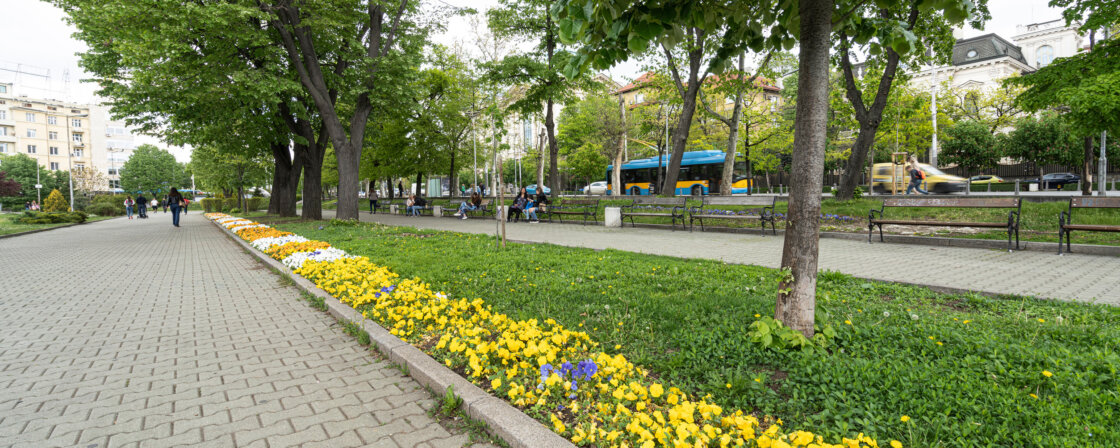
Public green spaces are not just parks and “grass around the pavement”. In the legal and operational practice of municipalities, it typically includes trees, shrubs, lawns, flower beds, estate greenery, tree plantings, areas around playgrounds and smaller residential areas. In addition, these are often not isolated vegetation elements, but part of a wider public space: benches, baskets, footpaths or retaining walls are often functionally linked to the greenery and therefore need to be addressed together by the municipality. This is also important legally, because according to Section 34 of the Municipal Act, public greenery is explicitly part of the public space. At the same time, it follows from Section 2(2) of the same Act that the municipality takes care of the all-round development of its territory and the needs of its citizens.
The practical problem is that not every ‘green space in a municipality’ is automatically under the management of the municipality. In practice, we often see that citizens report a dangerous tree or a neglected green belt to the town hall, but the land is actually managed by the county, the state, a school, a housing association or a private owner. Therefore, the first step is always not to “order an intervention”, but to verify the ownership and management of a specific area.
It is useful for the municipality to distinguish at least the following categories:
- areas that the municipality owns and manages itself,
- areas owned by the municipality but maintained by a contractor,
- areas within the municipality that belong to another entity.
In addition, for trees and shrubs it is necessary to bear in mind the Nature and Landscape Protection Act. The latter protects woody plants growing outside forests, including trees and shrubs in settlements. Therefore, the municipality is not only concerned with aesthetics and cleaning, but also with tree protection, safety and the legal regime for intervention.
Are you solving a similar problem?
Are you dealing with green maintenance in the village and don't know what to do?
In our legal advice centre, we will explain your rights clearly and advise you on how to proceed in your relationship with the municipality – quickly, online and without unnecessary delays.
More information
- When you order, you know what you will get and how much it will cost.
- We handle everything online or in person at one of our 6 offices.
- We handle 8 out of 10 requests within 2 working days.
- We have specialists for every field of law.
How to set up proper maintenance: passport, care plan and division of responsibilities
Proper maintenance of public green spaces does not start with a mower, but with an overview. The municipality should first know what areas and elements it actually manages, what condition they are in and who is responsible for them. The legal framework for doing so is based on a combination of the Municipalities Act, under which the municipality takes care of the development of its territory and the needs of its citizens, and the Nature and Landscape Protection Act, which protects trees growing outside the forest. In addition, for interventions in trees, it is necessary to respect Decree No 189/2013 Coll.
In practice, the three-step system works well for municipalities:
- greenspace passport – a map of areas, trees, shrubs, furniture and playgrounds, ideally in GIS,
- a care plan – what is done on an ongoing, seasonal basis and what is done only as needed,
- accountability and control – who orders the work, who takes it over and who deals with citizens’ suggestions.
Practical experience shows that most problems arise where care is “dispersed” between technical services, the environmental department, an external company and the mayor, but no one knows exactly who is supposed to look after what. Then it easily happens that a tree has been damaged for several months, citizens draw attention to it, but intervention is delayed because there is no clear process.
A well-conceived care plan should distinguish between routine maintenance, expert tree care and emergency situations such as storms or drought. For busy areas such as schools, bus stops or main pedestrian routes, the care regime should be stricter than for peripheral areas. It is this ‘prioritisation’ that is key in practice: the municipality does not have to maintain everything with the same intensity, but it must be able to justify why it has chosen such a regime.
Tree and hazard inspections: how often, by whom and what to record
For public green spaces, it is not enough to rely on someone “occasionally noticing” that a tree is leaning or that the pavement is lifting. In practice, it is the inspection regime that makes all the difference when the municipality then deals with a fallen branch, a damaged car or a pedestrian accident. The municipality already has a legal basis in the general duty of prevention under the Civil Code: everyone is to act in such a way as to prevent unjustified harm to the health, freedom, property or other rights of another. If the damage is caused by a tree or a branch “of its own accord”, Section 2937 of the Civil Code on damage caused by a thing under supervision also comes into play.
Practical experience shows that a municipality does not need to inspect everything equally often. It makes sense to take a risk-based approach: trees near a school, bus stop, parking lot, or major pedestrian route have a different regime than an alley on the outskirts of a community. It is the ability to explain why the municipality has inspected a particular place in this way that is often more important in a dispute than trying to ‘cover’ everything on paper.
It is usually worth including three levels in the system:
- routine visual inspections as part of regular maintenance,
- emergency inspections after a storm, ice or drought,
- professional assessment of trees at risk by an arborist or other qualified person.
Each inspection should have a record of: date, location, identification of tree or area, condition found, recommended action, date and person responsible. In practice, this is often what is missing. The municipality may claim that “the tree has been inspected”, but without a record, photo documentation and follow-up to the ordered intervention, this is difficult to prove later. A well-kept record is not extra paperwork. It is the municipality’s basic defense if it is going to address whether proper oversight was actually neglected.
Tip for article
Environmental pollution is not just a major ecological accident. It can also be illegal waste management, exceeding emission limits, poor storage, etc. Violations are punishable by heavy fines, the obligation to remedy, shutting down operations and, in serious cases, criminal liability. We took a closer look at the consequences in our article.
Felling, cutting and intervention in trees: what a municipality can do itself and when it needs a permit
In the case of municipal greenery, it is important to distinguish between normal tree care and intervention, which is already considered by law as felling or unacceptable damage. The basic regulation here is the Nature and Landscape Protection Act. Section 7 of the Act protects trees growing outside forests and Section 8 stipulates when felling requires a permit from the nature conservation authority. In practice, this means that the municipality cannot proceed along the lines of ‘it’s our tree, so we’ll deal with it as necessary’.
Cuts that are aimed at preserving the health or safety of the tree are usually part of routine professional care. However, the municipality must ensure that it does not tamper with the tree. Decree No. 189/2013 Coll. states in Section 2 that illegal interference is such damage or destruction of trees that significantly or permanently reduces their ecological or social functions or leads to their death. A typical problem in practice is “radical pruning”, which is formally passed off as maintenance but in reality seriously damages the tree.
Felling without a permit can only be carried out in cases defined by law. For example, Decree No 189/2013 Coll. in Section 3 lists tree species with a trunk circumference of up to 80 cm measured at a height of 130 cm above the ground or involved stands of up to 40 m², unless they are a tree plantation, a significant landscape element or a replacement planting.
In practice, it is safest for a municipality to ask three questions before intervening:
- is it still a professional maintenance or is it already an intervention with a permanent impact,
- is the tree covered by a statutory exemption,
- do we have documentation and professional justification for the intervention.
It is the last point that is often crucial. Not only because of the control by the nature conservation authority, but also because of the municipality’s defence towards the citizens, who are often sensitive to any major interference with mature greenery.
When greenery causes damage: tree fall, branches, roots and municipal liability
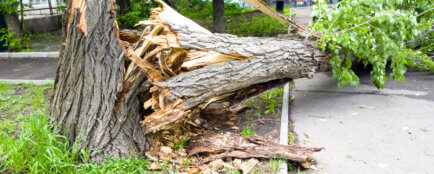
Damage caused by public greenery takes several typical forms in municipalities: a tree or branch falling on a car, a pedestrian being injured in a park, or roots damaging sidewalks and curbs. What is legally relevant is not just that the tree fell, but whether the municipality can prove that it had a reasonable system of care and supervision in place. This is where Section 2900 of the Civil Code, the general duty of prevention, and Section 2937 of the same statute, under which the person who should have supervised the thing “by itself” is liable for damage caused by the thing, most often meet in practice . If that person cannot be identified, it is presumed to be the owner. Liability shall be discharged only if the person who proves that he did not neglect the proper supervision. This interpretation is confirmed by the case law of the Supreme Court.
In municipal practice, a body of evidence is usually decisive: when the tree was last inspected, whether the municipality responded to citizen complaints, whether the tree had obvious defects, and whether there was an emergency inspection after extreme weather. In addition, the expectations of the public and the courts are naturally higher in the case of public greenery, which is part of the public space under section 34 of the Municipal Act, especially in busy areas.
In the immediate aftermath of a damage event, a municipality should by default do at least the following:
- secure the site and remove the immediate hazard,
- take photographic documentation and a brief record of the location, time and weather,
- trace the history of inspections, interventions and any complaints,
- report the incident to the insurance company and, depending on the situation, call the Czech Police.
Experience from practice is quite clear: the municipality defends itself best not by explaining after the damage why it is “not to blame”, but by being able to document regular inspections, follow-up interventions and clear records beforehand. This is what tends to make the difference when dealing with the victim and the insurance company.
Summary
Municipal green space is not just an aesthetic issue, but also a legal and operational responsibility. According to Article 34 of Act No. 128/2000 Coll., on Municipalities, public green space is part of the public space, and the municipality has to take care of the development of its territory and the needs of its citizens according to Article 2(2) of the same Act. In addition, for trees and shrubs, the municipality must respect Act No 114/1992 Coll., on the protection of nature and the countryside, in particular the protection of trees growing outside the forest and the rules for felling or damaging them. In practice, therefore, ‘cutting and occasional pruning’ is not enough. The municipality needs an overview of the managed areas, a green passport, a care plan, divided responsibilities, regular checks of risk areas and good records of interventions. If a tree, branch or roots cause damage, the Civil Code will also be considered, in particular the general duty of prevention under section 2900 and liability for damage caused by a thing under supervision under section 2937. In a dispute, then, it is usually not only the fact that the tree fell that is decisive, but more importantly whether the municipality can prove that it did not neglect proper supervision.
Frequently Asked Questions
What is considered public green space in a municipality?
These are typically parks, public green spaces, tree planting, estate areas, lawns or areas around paths and play areas. From a legal point of view, it is essential that public green spaces are explicitly listed in Section 34 of Act No. 128/2000 Coll., on Municipalities, as part of the public space.
Does a municipality have to maintain every green space on its territory?
No. Not every green space in a municipality is automatically owned or managed by the municipality. In practice, it may be land owned by the county, state, school, HOA or private owner. Therefore, the first step is always to verify the ownership and management of a particular area.
Is the municipality obliged to keep a green passport?
The law does not explicitly say that every municipality must have a “green passport” under that name. However, from the point of view of proper management and damage prevention, it is a very reasonable tool, as it helps to document what the municipality manages, what inspections it has carried out and what interventions it has ordered. This is particularly important in relation to the prevention obligation under Section 2900 of the Civil Code.
When can a municipality cut down a tree without a permit?
In general, according to Section 8 of Act No. 114/1992 Coll., a permit from the nature protection authority is required for felling trees, unless the law or the implementing regulation provides for an exception. Exceptions and details are regulated by Decree No. 189/2013 Coll.; in practice, it is therefore always safer to check in advance whether this is a case where a permit is required.
What if a tree falls on a car after a storm? Is the municipality automatically liable?
Not automatically. According to Section 2937 of the Civil Code, the person who should have had supervision over the item is liable and is only exempt from liability if he proves that he did not neglect proper supervision. Thus, in practice, a municipality may succeed with a defense if it can prove regular inspections, reasonable care, and response to risks.
How often should the municipality inspect trees?
The law does not set one fixed time limit for all trees. A risk-based approach is sensible: more frequent checks at schools, bus stops, car parks or busy pavements, less frequent at peripheral locations. Legally, it is important that the municipality is able to defend and justify the chosen scheme.
What should a municipality do immediately after a greenery damage event?
It should immediately secure the site, remove the acute hazard, take photo documentation, record the time, weather and exact location, trace the history of inspections and interventions and report the incident to the insurance company. It is the combination of prevention and documentation that is often most important for further liability assessment.