Quick overview:
- You must not burn bio-waste in the garden, i.e. in particular grass, leaves, weeds, wet branches or other plant waste for disposal.
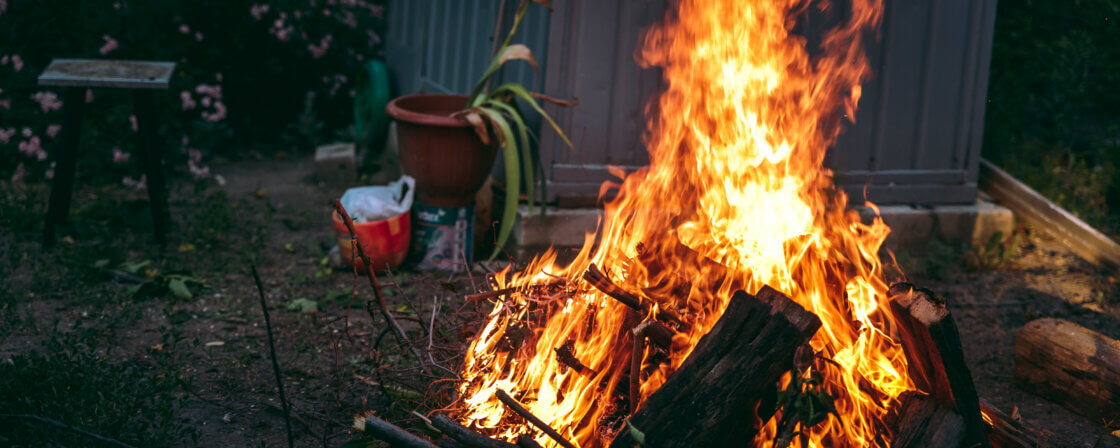
- An exception is a normal recreational fire, such as a bonfire, if you burn only dry, unpolluted wood.
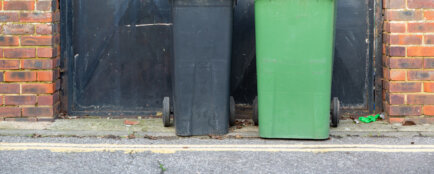
- You should dispose of your bio-waste in a compost pile, brown bin, municipal composting facility or collection yard.
- Violation of the ban can result in a fine of up to CZK 50,000; burning grass, weeds and bushes is also punishable separately.
Not sure if your case was a permitted fire or an offence? Describe the situation to us in the Legal Advice Centre and we will tell you what your real risk is and how to respond to the authority’s call.
| Situation |
Is it allowed? |
Why |
| Burning of grass clippings, leaves or weeds |
No |
This is the disposal of bio-waste by fire. |
| Burning fresh or wet branches |
No |
Typically this is bio-waste and produces thick smoke. |
| Campfires or dry wood fires |
Yes |
This is a recreational fire, not waste disposal. |
| Burning dry, unpolluted wood in a fire pit |
Usually yes |
The material must not be contaminated and the fire must be safe. |
| Burning of grass, brush or weeds in an area |
No |
The Fire Protection Act prohibits the burning of vegetation. |
Leaf and grass burning now banned everywhere
Burning leaves, branches or grass in your own garden used to be possible under certain conditions – depending on what your municipality allowed. It could be banned completely or restricted (for example, to certain days, hours or seasons).
At the same time, however, until recently there was confusion at the level of the law. While the Air Protection Act allowed the incineration of bio-waste, the Waste Act always considered it unacceptable. This legal contradiction has been a long-standing problem that only ended with the amendment effective from 1 March 2025.
The new legislation has unified the rules: burning grass, leaves and other biomass on open fires for disposal is banned nationwide. Municipalities can no longer change these rules by their own ordinance.
The only exceptions are where the fire is for recreational purposes (e.g. roasting sausages) or involves burning wood in stoves that meet emission limits. Only dry, unpolluted plant material, such as dry wood, may be burned on an open fire.
If you are going to light a fire on your property, for example when you are having a family get-together, it is advisable to report it in advance on the website paleni.izscr.cz. This way, the firefighters will know that it is not a dangerous fire and you will avoid an unnecessary call-out of the emergency unit.
It is therefore not worth burning anything in the garden that belongs in the compost or brown bin.
What to check before starting a fire in the garden
Before you light a fire, ask yourself a few simple questions. If you are unsure of any of the answers, it is safer to choose the compost, brown bin or collection yard.
- Am I burning dry wood or disposing of garden waste?
- Are there leaves, grass, weeds, fresh branches or wet material in the fire pit?
- Is the smoke a nuisance to neighbours or public spaces?
- Is there a widespread burning of grass, brush or weeds?
- Do I have the fire safely contained and means of extinguishment ready?
- Have I reported a larger recreational fire to the fire department via paleni.izscr.cz?
Firefighters recommend reporting recreational fires in advance so that the fire department does not make an unnecessary trip when smoke is reported.
Are you at risk of being fined for burning bio-waste? Before responding to the authority, it is worth checking that the act is correctly described and that the penalty is appropriate to the circumstances. The Legal Advice Centre can help you check the notice, prepare a statement or suggest the next steps in the offence procedure.
What is the penalty for the infringement? And are there exceptions?
The uniform ban on the burning of bio-waste has brought with it tougher penalties for those who do not respect it. In other words, anyone who sets fire to a pile of grass or branches in their garden risks a fine, even though the local ordinance may have previously allowed it. The new legislation considers such activities undesirable in terms of air protection and public health.
In practice, disputes often revolve not around whether a fire was started in the garden, but why it was started and what was actually burning in it. A bonfire made of dry wood will be judged differently by the authority than a pile of damp leaves, grass or fresh branches billowing smoke towards the neighbours. It is often the notification from neighbours that prompts the municipal authority or the fire brigade to deal with the matter.
Violations of this ban can result in fines of up to CZK 50 000 for individuals. In the case of legal entities and natural persons engaged in business, the penalty can reach up to CZK 500,000. And if there is a repeated violation, the entire case can be referred to administrative proceedings, where the penalty can increase further.
In addition, the Fire Protection Act explicitly prohibits the burning of grassland, weeds or scrub. Using fire for such a purpose is therefore illegal – it is not just burning a pile of leaves, but deliberately ‘clearing’ land with fire. If an individual does this, he or she can be fined up to CZK 25,000 for the offence. For entrepreneurs or companies, the upper limit is again significantly higher – up to CZK 500,000.
Border situations can be more complex. For example, dry branches used as fuel for a bonfire may be fine, while fresh branches burnt to get rid of them after pruning trees may already be assessed as bio-waste. Therefore, it is not enough to read the law just by the name of the material; the condition of the material, the quantity, the purpose of the burning and the impact on the surrounding area are also important.
Tip for article
Commit a misdemeanor? Anyone can do that. Just park where you’re not supposed to, turn up the music a little louder or throw your rubbish on the street. Offences are part of our lives, whether we are the perpetrators or the victims. In this article, we will look at the law governing misdemeanors, the misdemeanor process, penalties, and defenses to misdemeanor charges.
So what about bio-waste? The law foresees that people should use other ways: home composter, brown bin or municipal collection yard. Municipalities are obliged to provide citizens with options for the environmentally friendly treatment of bio-waste, for example through collection points, brown bins or composting plants. These measures aim not only to protect the environment but also to ensure the safety and health of the population.
Have you received a call from the local authority or are you dealing with a neighbour’s complaint about smoke from the garden? We can help you prepare a statement that is factual, complete and does not unnecessarily aggravate you. In the case of misdemeanours, it is often the details that make the difference: what exactly was burning, why the fire was started, whether it was a one-off situation and whether there was a real nuisance to the neighbourhood.
Summary
Burning bio-waste in the garden is prohibited. Therefore, grass, leaves, weeds, wet or fresh branches or other plant waste that you want to dispose of should not go into the fire. Recreational fires, such as bonfires, may be allowed as long as you use dry and unpolluted wood and follow fire safety rules. Individuals can be fined up to CZK 50,000 for burning bio-waste and up to CZK 25,000 for burning vegetation; entrepreneurs and companies risk fines of up to hundreds of thousands of crowns. The safest way is to compost bio-waste, put it in a brown bin or take it to a collection yard.
Tip for article
Becoming an offender can happen to many of us quite easily. All it takes is a moment of inattention behind the wheel or perhaps a slightly more exuberant party that someone judges to be disturbing the peace. Conversely, we can also become a witness and a whistleblower of someone else’s offence and subsequently initiate offence proceedings. What is involved and how does it work?
Frequently Asked Questions
Can I burn dry branches in my garden?
Yes, but only if the wood is truly dry and unpolluted wood used as fuel, for example for recreational fires. If you are burning branches mainly to get rid of pruning waste, this may be a prohibited disposal of bio-waste.
Can I burn leaves when they are completely dry?
No. Leaves are bio-waste and cannot be disposed of by burning them in the garden after the new rules. It belongs in the compost heap, in the brown bin or in the collection yard.
Does the ban on burning bio-waste also apply in villages?
Yes. From 1 March 2025, uniform rules apply throughout the Czech Republic. Municipalities can no longer permit by municipal ordinance what the law prohibits.
Is there a fine even if no one complained?
Yes. A complaint from a neighbour is not a condition of the offence. In practice, however, it is often smoke, smell or visible fire that leads to a report and subsequent inspection.
Do I have to report every backyard fire to the fire department?
A normal small fire is not always required to be reported, but for a larger recreational fire, reporting is appropriate. The firefighters then know that it is not a fire and can prevent unnecessary call-outs.
What to do if a neighbour is burning grass or leaves?
You can try to make an agreement first. If the smoke is bothering the neighbourhood or if there is repeated burning of bio-waste, you can contact the municipality, the municipal police or, in an emergency, the fire brigade.