Quick overview:
-
Verify the final approval of a project under the new Building Act.
-
Check project financing and bank liens.
-
Never pay the full price without a secure escrow.
-
Negotiate a firm completion date and penalties for delays.
-
Treat acreage, standards and client changes in detail.
If you are unsure, have an attorney review the contract before signing.
Extra caution is required when making such an investment. One is often blinded by the vision of one’s dream house with a rose garden or a luxuriously furnished apartment on the roof of a downtown building. At least that’s what the colourful, appealing visuals on posters and in the developer’s brochures look like. It must be said that the advantages of such a property are certainly many. However, from a legal point of view, it is usually a much more complicated operation than a normal property purchase.
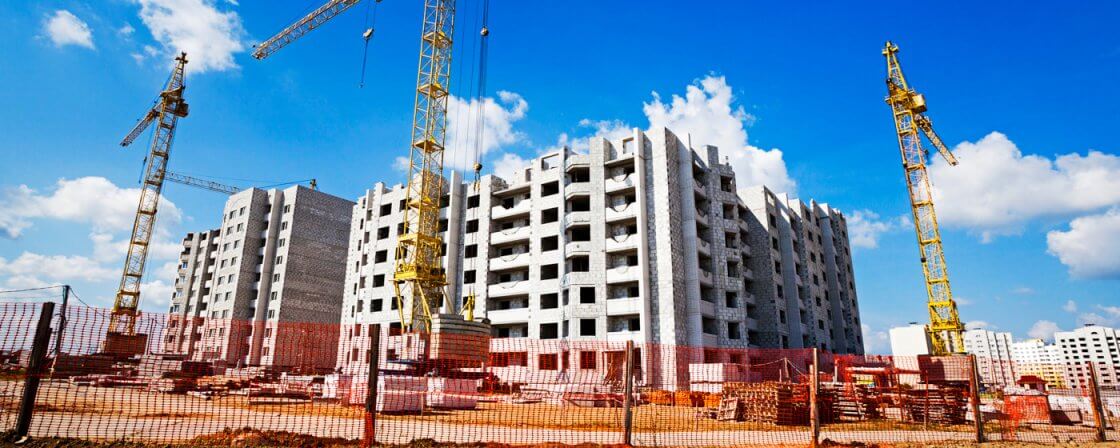
A situation where we commit to investing money in an apartment or house that is not yet standing can be very risky. At the time of purchase, everything is usually only “on paper” in the form of visuals. Even if you go to the place, it won’t help you much. The most you will see is the skeleton of the house, the workers and the construction machinery. In the end, the construction may be delayed for various reasons or even not happen at all. Or it may not match the original contract documents.
Tip for article
Whether you’ve discovered a piece of land you like but don’t know the owner or you’re buying a property and want to check it out, the Land Registry will be your essential tool . What can you find in it, how to search and what information is not there at all? We will answer this in our article.
Check the developer
Before you sign any contract, check the developer who will be carrying out the project. Pay particular attention to the booking contract and the terms of the refund of the booking fee. It should clearly state under what circumstances the fee is refundable and when it can be forfeited.
It is best to do this before the face-to-face meeting or inspection. Information can be found in public registers and elsewhere on the internet. It can be suspicious if you find no information and no mention of projects already undertaken, or conversely, a connection to a negative case for the company in question.
Be sure to also check the property itself. For example, if there are any easements, liens or other rights that could complicate a future project. Check the owner and other information available from the land registry, which can also be accessed online. If you wish, it is also possible to have an extract issued, which is more detailed.
Ideally, then check how the project is financed, whether the developer has a loan, with which bank and how it is secured. In most development projects, the land or the building under construction is usually encumbered by a bank’s lien. The contract must clearly state under what conditions the lien will be removed after the purchase price is paid. If this issue is not contractually addressed, the buyer risks acquiring a property encumbered by the developer’s debt.
It is necessary to consider whether to take the risk of projects paid for from own resources. This is the case where the developer is undertaking a number of projects from which it raises funds to build more and, if the construction of one project is stopped, the construction of the others will usually stop as well.
It is also advisable to require the submission of all planning permissions or building permits at the outset. However, from 2024 onwards, under the new Building Act, a single planning permission will normally be issued. Therefore, check that this permit is valid and that it covers the entire project, including all parts of it. Without a valid permit, the construction cannot be legally carried out and the project may be significantly delayed.
If a permit is missing, there is a risk that the developer will not receive it and the project will not proceed. These cases are by no means exceptional. Particularly in the case of flats in an extension, conservation authorities may intervene in the project.
Are you solving a similar problem?
buying a property?
We provide a complete legal service related to the purchase or sale of real estate, including a reservation contract and a lawyer’s escrow. We can also help with land registry and taxes. We can handle it quickly and flawlessly so you don’t have to worry about a thing. You can pay after the service has been provided.
I want to help
- When you order, you know what you will get and how much it will cost.
- We handle everything online or in person at one of our 6 offices.
- We handle 8 out of 10 requests within 2 working days.
- We have specialists for every field of law.
Pitfalls of the purchase contract
For example, Jan, a programmer, wanted to buy an apartment and was in a hurry. He didn’t have much time to check all the details, or maybe just the patience. All he wanted to do was to check that the purchase contract did not contain any obvious errors, but otherwise he was eager to sign it. The apartment was not yet standing, but it was supposed to be beautiful, with a dreamy view and in a “trendy” Prague neighborhood.
However, we pointed out to him that according to the contract, the price was to be paid right at the beginning, without any tangible guarantee that the apartment would be built at all(the building permit had not yet been issued for the entire project). At first, the client considered this an inconvenience, which we were throwing a stick under his feet and spoiling his joy. But then he realized that the risk resulting from what we had warned him about was quite high.
However, the developer agreed to most of our client’s demands, which we recommended to him to take into account in the contract, and he gave in. After all, the price was very high, so it was worth fighting for the client and spreading the purchase price at least a little.
In the end, the dominant part was paid after the completion of the construction. The contract for the purchase of the apartment was concluded and today the apartment is almost completed and transferred to the ownership of Mr. Jan. The remainder of the escrow will be paid when the approval of all adjoining premises is completed.
If your developer refuses to modify the problematic provisions, do not be afraid to consult a lawyer specialized in real estate about the situation.
Write everything down properly
A buyer should also not rely solely on verbal agreements and promises about certain parameters or features of the property. Everything should be in black and white and part of the contract. Then he or she will not have to worry about something being made differently or wrong when handing over the flat.
In addition to spatial visualizations and models, we recommend requiring technical drawings with precise parameters. This also applies to any modifications requested by the client compared to the “catalogue form”, so-called client changes. Each client change should be addressed in a written addendum that sets out the exact price, method of payment and any impact on the completion date. In our experience, verbal agreements are difficult to prove and often end in litigation.
For example, Jakub, a lawyer from Mariánské Lázně, discovered that his apartment was ten square metres smaller than the project stated. Fortunately, the contract specified the exact deviation that could be tolerated and he was compensated. However, beware of such percentage deviations. We also dealt with a case of a house where the ceiling was only two metres twenty metres above the ground instead of 2.5 metres. In such a case, it is practically impossible to remove the defect and the only solution is to withdraw from the contract.
Minor faults often relate to poorly fitted doors or built-in wardrobes. Here, the devil is indeed in the detail.
When you hand over your flat or house, or ideally during the construction process, you can take a specialist property inspector with you to inspect the property properly. Compared to the purchase price, this service is not expensive and can save you a lot of hassle. The handover is by no means a formality, so make sure you really inspect everything carefully.
If you find a defect, document it, perhaps by taking a photo on your mobile phone, and record it in the handover report. You have the right to have any defects that were on the property at the time of handover removed. However, we recommend that you also explicitly include a guarantee in the contract for defects that arise after handover. These are two different legal situations.
Summary
Buying a property from a developer is legally more complex than a normal transfer of an existing property, as the buyer often invests in a project that has not yet been completed or approved. Before signing any contract, it is necessary to check the developer itself, the financing of the project and the legal status of the property in the land registry, including any bank liens. The key is to verify the final approval of the project under the Building Act, carefully set the terms of payment of the purchase price (ideally through escrow and staged financing), negotiate a firm completion date and address penalties for delay. The contract must precisely define the parameters of the apartment, the permissible variations in size, client changes and liability for defects, while distinguishing between legal liability for defects and contractual guarantee. The handover of the property also requires increased care, where all defects must be consistently recorded in the handover report. A thorough legal review of the contract documentation before signing can significantly reduce the risk of financial loss or long-term litigation.